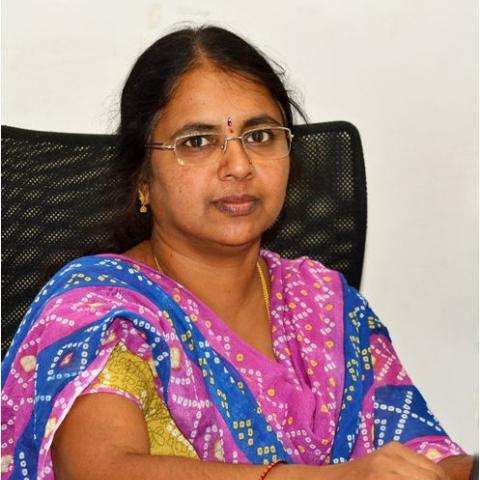

Sr. Fellow, Forests, Governance and Livelihoods
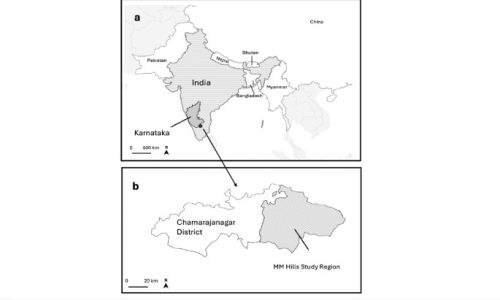
Siddappa is an ethnobotanist who has bridged science, policy and practice to achieve sustainable development in the tribal areas of the Western Ghats from 1994. He served as the Centre Convener for six years at the Rohini Nilekani Philanthropies Centre for Environment and Development at ATREE, addressing critical issues at the intersection of environment and development, with a focus on forests, water, and climate change. Currently, Siddappa leads the Forest Governance and Livelihoods programme. The programme’s goal is to understand, design, and explore strategies for co-management of conservation-priority areas, ensuring that conservation efforts both respect and involve local communities. Siddappa has been working for the past 32 years to support the livelihoods of commons, particularly the Soliga indigenous community, and promote the sustainable use of forest resources in the protected areas of the Western Ghats, India.
Siddappa has developed models of community-led conservation, showing that biodiversity conservation and sustainable development can progress together through the active participation of Indigenous communities. Siddappa is known for his commitment to advancing collective action, resource governance, and community-driven initiatives. He has exhibited exceptional leadership in fostering self-governance and sustainable management practices. Within ATREE, he has played a pivotal role in implementing livelihood and conservation projects, including:
Siddappa worked very closely with Soliga community institution at Taluka and District level (Taluka Soliga Abirudhi Sangha and Zilla Budakattu Girijana Abhivrudhi Sangha) used novel methods that can be employed towards managing commons to implement the Forest Rights Act, in which 77 Gram Sabhas have received community rights and 2050 households have received cultivation rights under individual forest rights. Currently facilitating the development of community-led forest resource management plans to address conservation and sustainable livelihood issues.
Siddappa teaches qualitative methods and enterprise-based conservation models to our master’s and Ph.D. students and guides them. He has published around 40 peer-reviewed papers. Siddappa is a recipient of the prestigious Fulbright-Nehru Fellowship. He was honoured with the Karnataka State Indira Priyadarshini Environment Award (2025) and the Lifetime Achievement Award (2025) by EMG-SSM Trust. The project “Weeds to Wealth” received the iF Social Impact Award.

Sharad teaches 3 core courses in ATREE’s MSc and PhD programmes:
“Conservation is an important part of the environmental debate today. It is also the prime focus of this Masters programme. This course investigates the history, definition, scope, values and ethics underpinning that term, explores its relationship with other environmental concerns, the relationship of environmentalism with other societal goals, and the challenges of effective environmental conservation in democratic societies. At the end of the course, students should be able to describe the different cultural conceptions of what is to be conserved and why, and coherently articulate the challenges to effective and ethical conservation in a democracy. In brief, we try to foster “an honest conversation about conservation”!
This core course builds on the disciplinary knowledge to which students are exposed in semester 1 and focuses on the challenge of linking and integrating this knowledge to study society-environment interactions holistically. The first half of the course is common to PhD and Master students, in which we explore the nature of environmental problems as a special class of social problems, of the inherently value-laden nature of such problems, and the need for and challenge of doing rigorous interdisciplinary but rigorous research in this context. We discuss the normative concerns that are central to the environment-development debate. We then take students through different (often competing) perspectives on the society-environment relationship.
In the second half of the course, we will separate the tracks for the PhD and MSc students: The PhD students will focus on understanding how interdisciplinary research projects/dissertations have sought to frame and conduct such research with a series of examples that have used one or more of these perspectives to frame and analyse a particular environmental problem. The MSc students will focus on understanding how interdisciplinary ‘solutions’ are crafted, whether for policy or for practice, focusing on what normative concerns and merging multiple causal perspectives and solution styles in what way.
Conservation/environmental policy refers to the work of the state in setting directions, drawing boundaries, defining standards and incentives/disincentives, and monitoring and enforcing these mechanisms to achieve conservation and environmental goals. A broader perspective includes the role of the judiciary, civil society groups, and the resource users and those affected. This course introduces key theoretical concepts: why environmental policy/governance is necessary (nature of the resource, nature of societal decision-making) and what its instruments can be (legal, fiscal and administrative). We then use examples from various sectors—with a special focus on biodiversity and forests—to understand how these instruments are deployed and how they perform in India. We also discuss how other state and non-state actors such as the judiciary and social movements have shaped environmental policy in India.
Sharad engages actively in contributing his interdisciplinary environmental knowledge to the policy sphere by serving on various local, state and national committees/task forces.
Ongoing engagements:
Past engagements: