A new study by ATREE Entomologists documents 75 beetle species eaten by Indigenous communities in Northeast India, including 24 species reported as edible for the first time globally and five additional first records of edible use in India. The study published in published in npj Entomology, A Nature group Journal on 12 October 2026, highlights the region’s rich biodiversity knowledge and the importance of conserving both that knowledge and the beetles’ habitats.
As the global population grows, finding nutritious and sustainable sources of animal protein is becoming increasingly important. Moreover, conventional livestock production like poultry and cattle accounts for nearly 14.5% of global greenhouse-gas emissions and contributes to large scale land degradation and air and water pollution. So researchers are exploring additional protein sources, including insects. Insects provide relatively more protein, carbohydrates, essential fatty acids, vitamins and minerals. Studies suggest insect farming is more sustainable, as it produces fewer greenhouse-gas emissions and demands much less water and land than conventional livestock farming. So Food and Agricultural Organisation of United nations is now promoting entomophagy or eating insects. Eating insects is not a new concept. Indigenous communities in many parts of the world have included them in their food traditions for generations. More than 3,000 ethnic groups across 113 countries consume over 2,205 known insect species from 25 orders and 183 families.
Among the many insects consumed worldwide, beetles and weevils represent an important but relatively understudied group. Belonging to the order Coleoptera, the largest order of insects, they occupy a wide range of terrestrial and aquatic habitats. In many parts of the world, including Northeast India, these insects are valued not only as food but also for their cultural and medicinal significance.
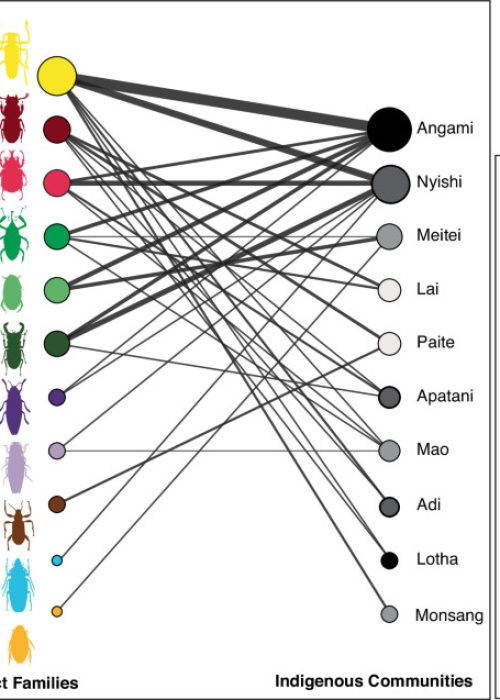
This study led by Priyadarsanan Dharma Rajan and supported by the National Mission of Himalayan Studies (NMHS), Ministry of Forests, Environment & CC (MoEFCC), (NMHS/2017-18/MG33/17) and by the Department of Biotechnology, Government of India (BT/01/17/NE/TAX), included the researchers Swapnil S. Boyane, Aavika Dhanda, A. P. Ranjith, and T. Shantibala. They interviewed 162 people across nine Indigenous communities in Arunachal Pradesh, Manipur, Mizoram and Nagaland, and collected beetles in the field and scientifically identified. The team recorded harvesting seasons and methods, culinary practices, cultural beliefs and medicinal uses. Many species were unique to individual communities, with relatively little overlap. Beetles were gathered from different habitats, including forests, bamboo clusters, paddy fields and wetlands. Depending on species and life stage, people consumed the beetles boiled, roasted or fried beetles, sometimes with bamboo shoots or local spices.
Nutritional analysis of four species found substantial differences in composition. Protein ranged from 22.43% to 61% of dry weight. The common coconut pest Oryctes rhinoceros and weevils of the genus Cyrtotrachelus having the highest protein value , ranging from 46.44 to 61% of dry weight. On the other hand, aquatic beetles showed a lower value from 22.43 to 23.23%. The authors say the variation underscores why nutritional claims should be tied to particular species and samples, rather than generalized to all edible beetles. The researchers also found significant differences among species in lipids, moisture, ash, energy and mineral content.
The paper also points to conservation risks. About 79% of harvesters interviewed reported a decline in wood-boring beetles in the last one decade; among those reporting declines, 63% attributed them to deforestation and habitat loss, while others attributed this to overharvest due to market demand. Researchers also observed tree cutting to extract larvae of wood boring beetles, which are a delicacy here. Collecting the wood borers by cutting down the trees often acts as a natural biocontrol of forest pests, but largescale harvesting could affect forest health if harvesting is not carefully managed. They recommend sustainable practices to meet the growing market demands such as protecting natural habitats, using season- and life-stage-specific harvesting practices, mass rearing, and involving Indigenous communities in decisions about sustainable use.
Indigenous communities hold a wealth of traditional knowledge, much of it passed down orally through generations. This paper offers a model for codifying that knowledge by bringing Indigenous communities and scientific researchers together, adding new values and insight while safeguarding communities’ rights over how their knowledge is recorded, shared and used.