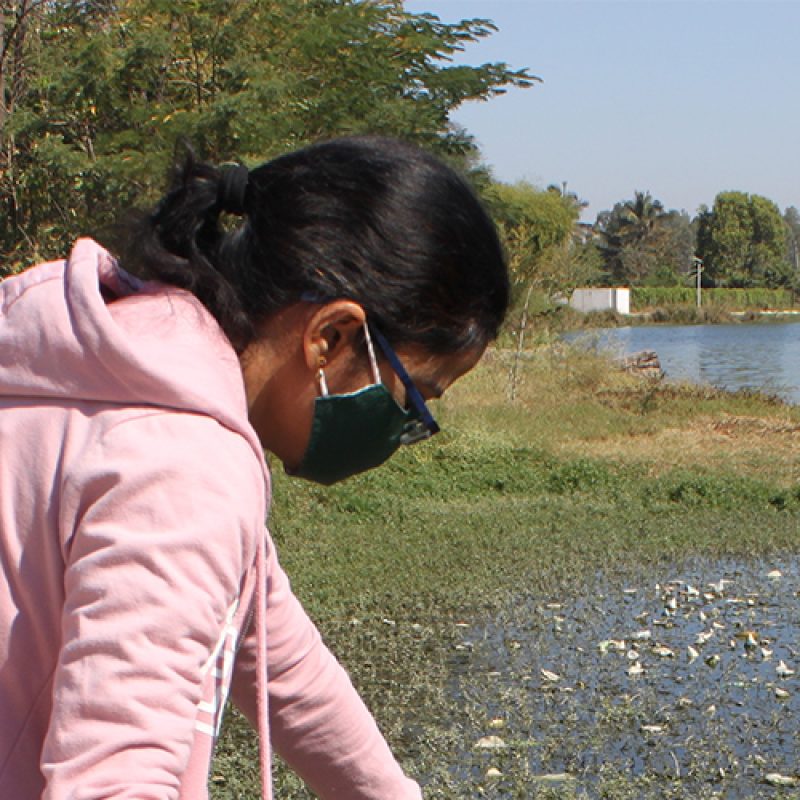
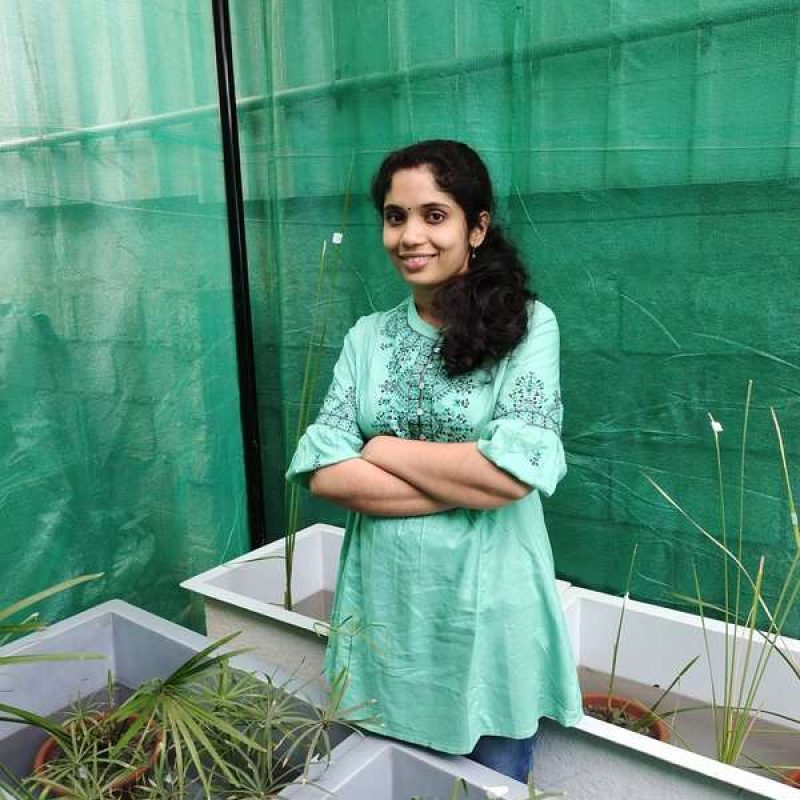
The Water and Soil Lab at ATREE is the analytical foundation for translating chemical and biological data into nature-based solutions, thus advancing water science for resilient ecosystems. Led by Dr. Priyanka Jamwal, our team provides the evidence base for lake restoration, decentralised wastewater treatment, nutrient recovery and public health policy. By integrating high-quality laboratory data with advanced water quality modelling tools, we deliver actionable insights for sustainable urban and rural planning.
Integrated research for water resource management
The lab supports interdisciplinary research across five interconnected themes: water resource management, nature-based solutions, contaminant fate and transport, public health and urban lake restoration. We approach water quality holistically, recognising that elements in the soil directly influence irrigation water, agricultural produce, and public health. Our collaborative efforts extend to working closely with local governance, including Panchayats and the BBMP Climate Action Cell, to implement sustainable blue-green infrastructure.
Anchor projects
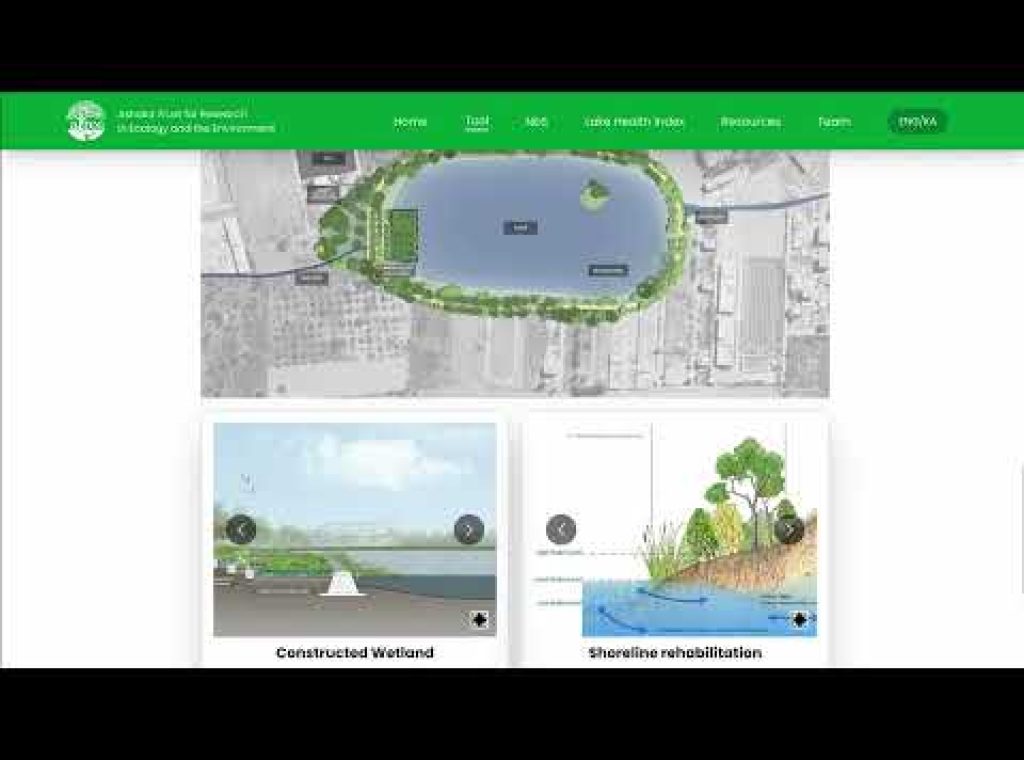
Lake Revive: A decision-support tool guiding nature-based lake restoration.
Urban Lake Restoration: Comprehensive studies and physical restoration for Jakkur, Kannamangala, Chudasandra, and Baiyappanahalli lakes.
AquaWISE: Integrated water resources management for government schools.
River Restoration Roadmaps: Collaborative planning with the Government of Karnataka for the Arkavathy and Vrishabhavathy rivers.
Key Areas of Work
Wet Chemistry
Our core workspace quantifies Nitrogen, Phosphorus, COD and BOD to design and evaluate effective ecological interventions.
Nutrient mass balance: Reducing phosphorus load to prevent algal blooms and reframe restoration targets.
Constructed wetlands: Measuring plant and microbial roles in nutrient removal.
Restoration benchmarks: Generating data for the Total Phosphorus-based restoration benchmarks used in the Lake Revive Tool.
Instrumentation
We quantify trace metals in water, sediment and soil, supporting vital investigations into pollution flows and ensuring agricultural supply chains and aquifers remain safe.
Research outputs:
Urban river quality: Sampling industrial streams to capture temporal variations and inform regulatory frameworks.
Source apportionment: Quantifying elemental loads from diverse urban and industrial sources.
Command-area studies: Tracing heavy metal movement from irrigation water in Command areas into soils and crops.
Microbiology Lab
Enumerating indicator-bacteria alongside antimicrobial-resistance (AMR) phenotyping to identify water safety levels and proactively manage resistance genes.
Anchoring outputs:
AMR surveillance: Identifying and managing multi-drug resistant strains across soil, litter and water in developing catchments.
Validating natural treatment: Proving the efficacy of constructed wetlands in reducing faecal-indicator loads.
The generated quality-assured measurements are designed to empower lake-restoration designers, municipal authorities, citizen groups, and state-level policymakers.
Where our data drives change:
Engineering the design of constructed wetlands and floating treatment islands.
Establishing the analytical core for ATREE’s Lake Revive decision-support tool.
Facilitating state roadmaps on urban flood resilience and river restoration.
Shaping public-health discourse on AMR and drinking-water safety.
Fostering the next generation of environmental leaders.
Wet Chemistry
Our core workspace quantifies Nitrogen, Phosphorus, COD and BOD to design and evaluate effective ecological interventions.
Nutrient mass balance: Reducing phosphorus load to prevent algal blooms and reframe restoration targets.
Constructed wetlands: Measuring plant and microbial roles in nutrient removal.
Restoration benchmarks: Generating data for the Total Phosphorus-based restoration benchmarks used in the Lake Revive Tool.
Instrumentation
We quantify trace metals in water, sediment and soil, supporting vital investigations into pollution flows and ensuring agricultural supply chains and aquifers remain safe.
Research outputs:
Urban river quality: Sampling industrial streams to capture temporal variations and inform regulatory frameworks.
Source apportionment: Quantifying elemental loads from diverse urban and industrial sources.
Command-area studies: Tracing heavy metal movement from irrigation water in Command areas into soils and crops.
Microbiology Lab
Enumerating indicator-bacteria alongside antimicrobial-resistance (AMR) phenotyping to identify water safety levels and proactively manage resistance genes.
Anchoring outputs:
AMR surveillance: Identifying and managing multi-drug resistant strains across soil, litter and water in developing catchments.
Validating natural treatment: Proving the efficacy of constructed wetlands in reducing faecal-indicator loads.
The generated quality-assured measurements are designed to empower lake-restoration designers, municipal authorities, citizen groups, and state-level policymakers.
Where our data drives change:
Engineering the design of constructed wetlands and floating treatment islands.
Establishing the analytical core for ATREE’s Lake Revive decision-support tool.
Facilitating state roadmaps on urban flood resilience and river restoration.
Shaping public-health discourse on AMR and drinking-water safety.
Fostering the next generation of environmental leaders.