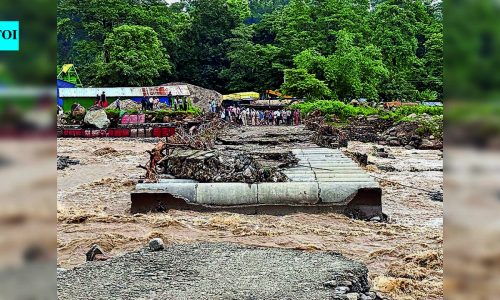
Climate resilience was a major focus of the dialogue, with discussions examining how glacier retreat, changing river systems, extreme weather and mounting pressure on mountain ecosystems affect communities and have wider implications for water security, disaster preparedness, biodiversity, infrastructure and livelihoods. In a special address on ‘Transformative Approaches for Developing Resilient Himalaya’, Padma Shri Eklabya Sharma
The United Nations University Institute for Water, Environment and Health (UNU-INWEH) and the Ashoka Trust for Research in Ecology and the Environment (ATREE) have signed a Memorandum of Understanding (MOU) to strengthen collaboration on policy-relevant research, capacity building and knowledge exchange focused on environmental and sustainable development challenges in the Himalayan region.