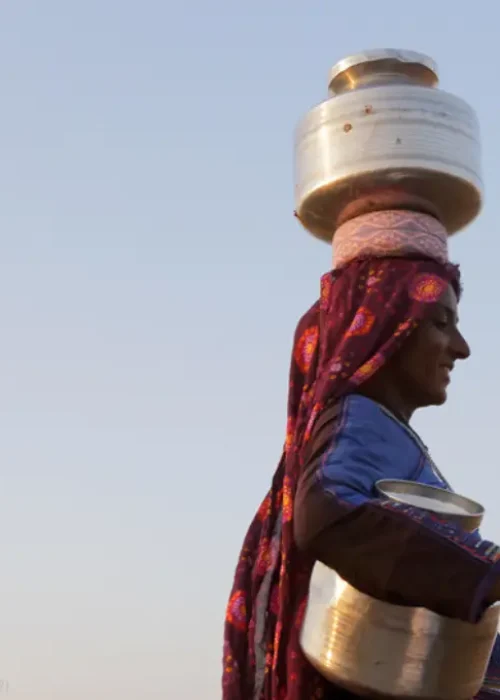
An opinion piece co-authored by Deepanjana Saha and Sarvesh JP, arguing that women’s accumulated knowledge of local water systems, their sources, reliability, and stress signals, is systematically excluded from India’s water planning. The article traces how JJM, Atal Bhujal Yojana, and irrigation institutions include women at the service-delivery layer while decisions on extraction, allocation, and groundwater regulation remain beyond their reach. It proposes three low-cost reforms: adding source-behaviour fields to JJM’s water quality reporting network, extending Atal Jal-style water budgets to all over-exploited blocks with formal weight in state groundwater notifications, and including elected women panchayat members or SHG federation representatives in district drought-allocation bodies.