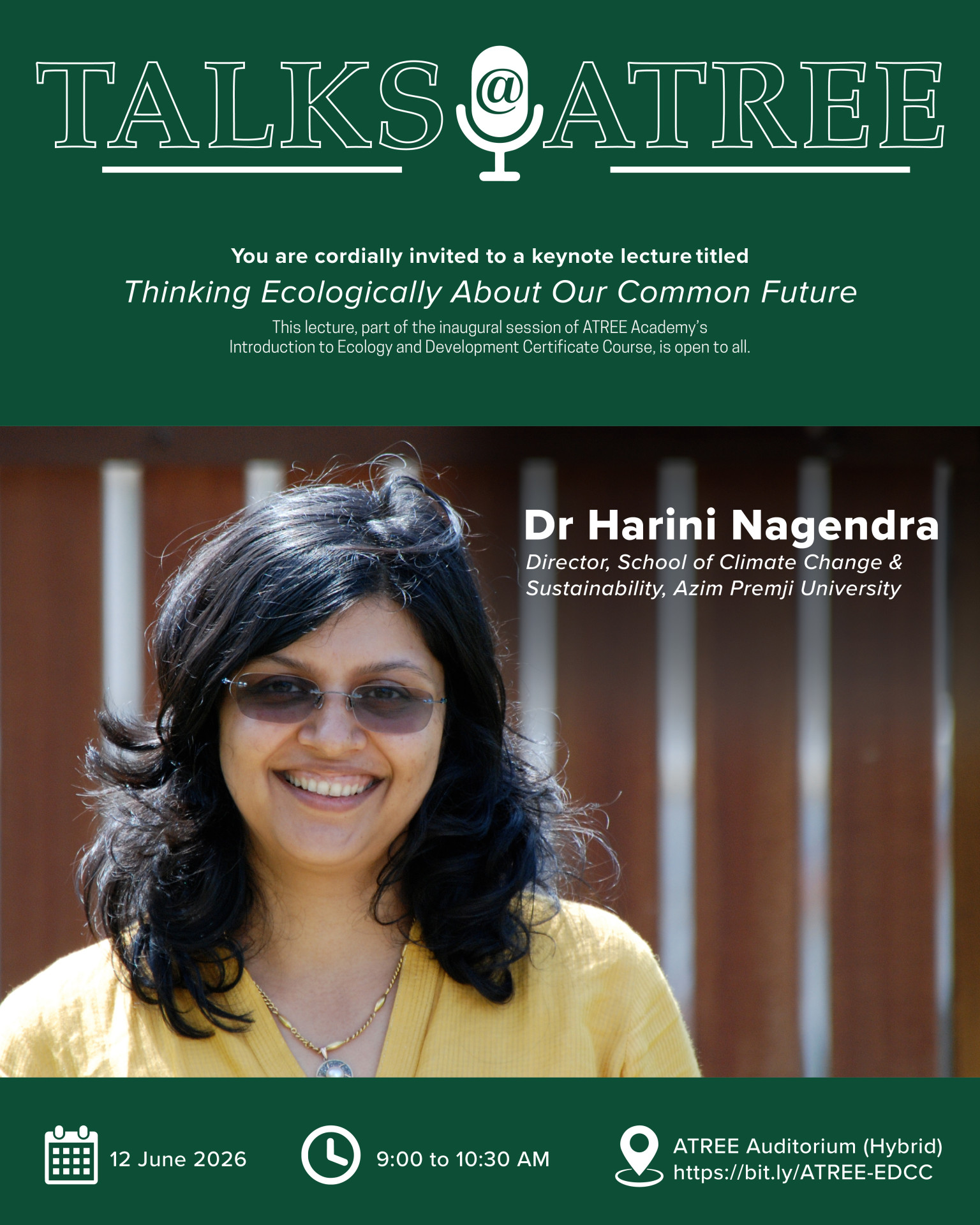
Cities and rural regions alike are on a breakneck path to growth and “development” across regions of the global South – especially so in India. Fractures and stresses are visible at every corner – while looming global concerns of climate change and biodiversity collapse clash with local challenges such as pollution, resource insufficiency and stresses on livelihoods. It has never been more clear why we must begin to think ecologically about our common future. Yet the discussions of development and economic growth rarely include considerations of ecology, rights to nature and sustainability – while conversations around conversation can also tend to exclude equally important aspects of justice, equity and human needs. Research from the global North has historically driven frameworks and approaches of development and growth deployed in the global South. The problems of such an approach are visible around us. We need to collectively develop a different imagination of development, one that is rooted in the Indian context, and draws inspiration from appreciating the intertwined nature of social and ecological systems. Such an imagination would take us past dichotomies of anthropocentric or biocentric views of nature, and help us understand how to develop, restore and nurture collective and relational conversations between people and nature. At the same time, we must recognize that we are on a breakneck path to growth and urbanization – a return to an imagined ‘glorious past’ is neither possible nor desirable. Through this conversation, we will look at what could be seeds of hope, pointers for a better future – and why collective action and commoning lies at the core of visioning for sustainability.
About the speaker:
Dr. Harini Nagendra is an ecologist, sustainability scholar, and Director of the School of Climate Change and Sustainability at Azim Premji University. With over three decades of research on forest conservation, urban ecology, and the relationship between people and nature, she is internationally recognised for her interdisciplinary work spanning ecology, remote sensing, biodiversity, and the commons. She has published more than 200 scholarly papers, served as a Lead Author for the IPCC, and received numerous honours, including an Honorary Doctorate from Utrecht University and the Elinor Ostrom Senior Scholar Award. Beyond academia, she is a widely read public writer and author of acclaimed books such as Nature in the City, Cities and Canopies, and the Bangalore Detectives Club mystery series, and is known for making complex environmental issues accessible to diverse audiences.