Hello,
In this edition of Branches, we share updates on projects underway across India.
These include using ecological approaches to conserve a Gondwanan oyster in the Western Ghats; improving economic returns from forest products in Community Forest Resource Rights villages in Bastar, Chhattisgarh; restoring peri-urban lakes in Bengaluru; and promoting participatory protection and sustainable management of aquatic resources in the Chakpi River, Manipur. We also feature a step-by-step StoryMap on lake restoration. |
|
|
|---|
|
PROJECT Ecological approaches for the conservation of a Gondwanan Oyster in the Western Ghats, India, by Rubin Lobo Marina and Aravind Madhyastha N.A | | | | | | | 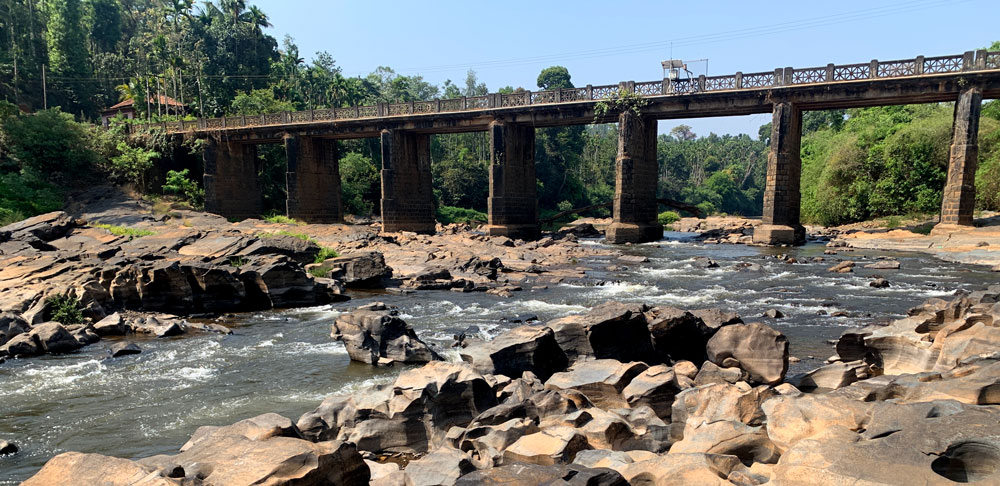 | | | | | | | | | |
|
BACKGROUND Lotic ecosystems, including rivers and streams, are among the most threatened globally, and freshwater bivalves in these systems are increasingly affected by multiple stressors, including habitat modification, pollution, invasive species, overharvesting, disease and land-use change. The ecology of most freshwater bivalves in India remains poorly understood. Pseudomulleria dalyi, first described by Edgar A. Smith (1898), is an endangered freshwater oyster endemic to the Tunga and Bhadra rivers in Karnataka, with an estimated population of 5,000–6,000 individuals. Considered a Gondwanan relic, it has persisted for millions of years and was rediscovered after a century by Madhyastha (2001). The species inhabits stable, free-flowing rivers, attaching to rocky substrates, but is increasingly threatened by anthropogenic pressures, including dam construction, destructive fishing practices and habitat alteration, particularly in regions undergoing rapid infrastructure development.
CHALLENGES Population estimates and distribution data are inadequate, necessitating a comprehensive survey to evaluate its status and identify critical habitats. Although a relationship between bivalve distribution and fish populations has been suggested, host-fish associations for P. dalyi larvae remain poorly understood. The cumulative impacts of environmental disturbances, including pesticide contamination and altered river flow from dam construction, are still not well understood. Limited water-quality monitoring specific to P. dalyi emphasises the need for systematic investigations into environmental stressors affecting its survival. Furthermore, the influence of land use changes, deforestation and climate variability on riverine water quality requires GIS-based spatial analysis to assess their effects on habitat quality and distribution.
OUTCOME The project will generate critical baseline information on the distribution, population density, reproductive biology and ecological requirements of Pseudomulleria dalyi. Using high-resolution ecological niche models that incorporate hydrological and environmental variables, the study will identify current and potential suitable habitats, aiding in prioritising key conservation areas within the Tunga and Bhadra river systems. It will also evaluate the effects of land-use change on river ecosystems and how these changes impact the species' survival. Additionally, it will support broader ecosystem-level protection, especially for native fish communities associated with freshwater bivalves. | | |
|
|
|
|---|
|
|
PROJECT Enhancing economic returns from forest products in Community Forest Resource Rights Villages, Bastar, Chhattisgarh, by CFR-CII Bastar team, facilitated by Yashashree Garge, Anubhav Shori, Anuja Date and Shruti Mokashi | | | | | | | 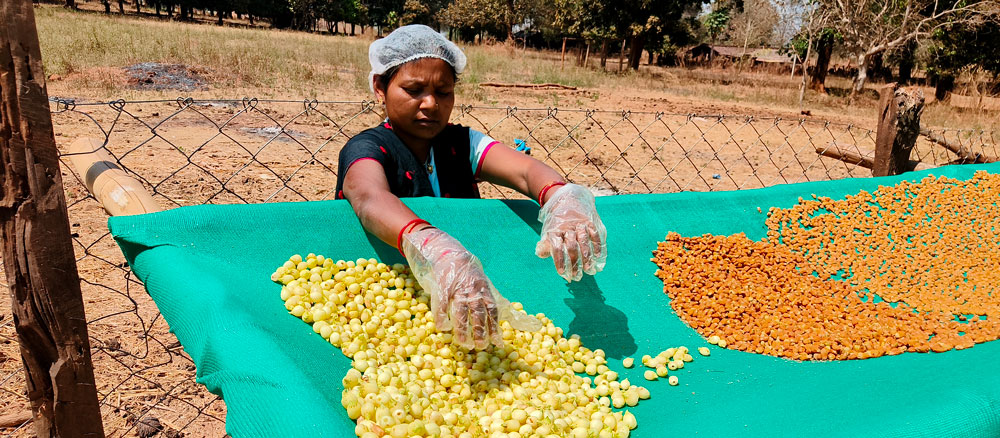 | | | | | | | | | |
| BACKGROUND One of the key promises of the Forest Rights Act (FRA) was to increase the control forest-dependent communities can exercise over forest produce collection and the prices they command. However, access to markets, information and adequate investment to improve returns from non-timber forest products (NTFP) eludes many Community Forest Resource Rights (CFRR) holders. The Bastar team works with Gram Sabhas in planning and implementing CFR management activities. To determine whether these Gram Sabhas can anchor improved management processes for NTFP collection and enhance economic returns, a pilot was initiated with DCB Bank’s support in 2 villages, focusing on collectivised sale of sun-dried, food-grade Mahua (Madhuca longifolia) flowers.
Mahua flowers, an abundant NTFP in the Bastar region, are an important source of food and livelihood. Households commonly collect, dry and sell Mahua flowers in markets through small local traders, receiving measly returns. Studies suggest that improving Mahua collection, storage and introducing vertical integration can increase returns for collectors.
CHALLENGES Of late, Mahua has been increasingly marketed as a ‘superfood’ with potential to build consumer demand, introduce diverse Mahua-based products and improve price discovery. However, to achieve this, the communities are required to work on improved collection, drying and packaging processes. The challenges included: - Motivating CFRR villagers to shift from household-level to collective sale of Mahua.
- Identifying potential bulk buyers who can offer fair prices for improved quality and quantity of flowers.
- Facilitating CFRR villages in understanding Gram Sabha-based contracts, trade processes, record-keeping and accountancy.
- Introducing standards, procuring appropriate materials and adapting as per local suitability, and training for, as well as tracking the food-grade Mahua collection.
- Identifying gendered responses to changes in collection techniques and modifying processes to strengthen women’s contribution.
- Responding to logistical challenges in organising short-season NTFP sales.
OUTCOME - Collection and bulk packaging of dried, food-grade Mahua flowers (with less than 10% moisture content, no contamination, uniform colour, no fungus) by the Gram Sabha.
- Competitive prices for food-grade Mahua flowers with increased incomes for participating households.
- Strengthening CFRR Gram Sabhas’ confidence and capacity for organised marketing of NTFPs.
- Reducing the drudgery of women Mahua-flower collectors.
| | |
|
|
|
|---|
|
|
PROJECT Peri-Urban lake restoration – Bengaluru, by Priyanka Jamwal, Hymavathi P., Lakshmi Raveendran, Rakesh P., Sagna A. and Kathir | | | | | | | 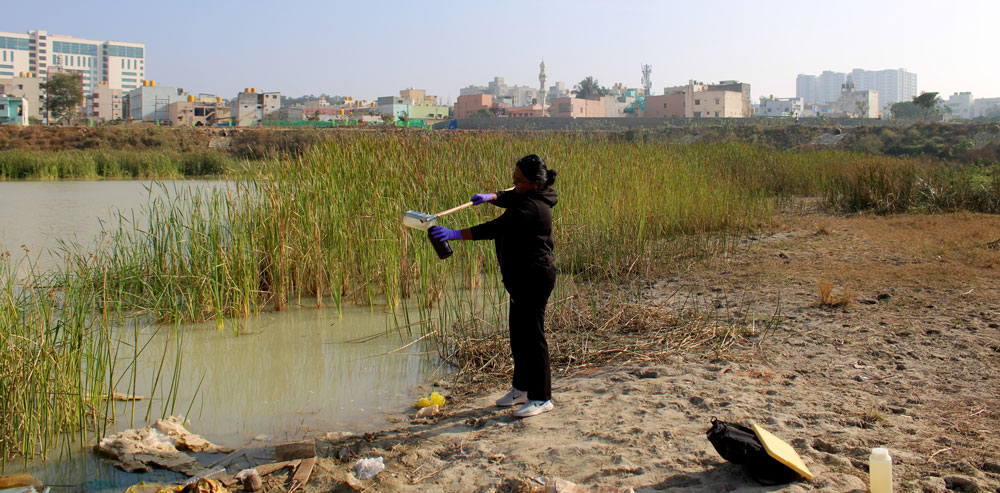 | | | | | | | | | |
| BACKGROUND Bengaluru's landscape has transformed dramatically from a network of tank-based villages to dense urban sprawl. Historically reliant on traditional water management systems, the city today has only 40% of its area connected to the sewerage network. Of the 200+ lakes in the region, fewer than 50 have been scientifically restored. CHALLENGES - Untreated sewage inflow continues to degrade lake ecosystems despite restoration efforts.
- Restoration projects are assessed against unrealistic bathing-water standards, misrepresenting outcomes.
- Cosmetic interventions prioritised over ecological health lead to rapid post-restoration deterioration.
- Limited community engagement undermines long-term stewardship and sustainability.
- Absence of locally relevant benchmarks slows down the adoption of Nature-based Solutions (NbS) across rapidly urbanising regions.
OUTCOME - Developing context-specific benchmarks for lake health in Bengaluru.
- Generating water quality and biodiversity data across selected lakes.
- Improving the planning and implementation of NbS.
- Strengthening collaboration with communities, policymakers and institutions.
- Creating a data repository and policy briefs to guide restoration efforts.
| | |
|
|
|
|---|
|
|
| | PROJECT Protection and Sustainable Management of Aquatic Resources in Manipur: Participatory Approach for the Management of the Chakpi River, by Nobinraja M., Aravind N. A and Ravikanth G. | | |
| | | | | | | 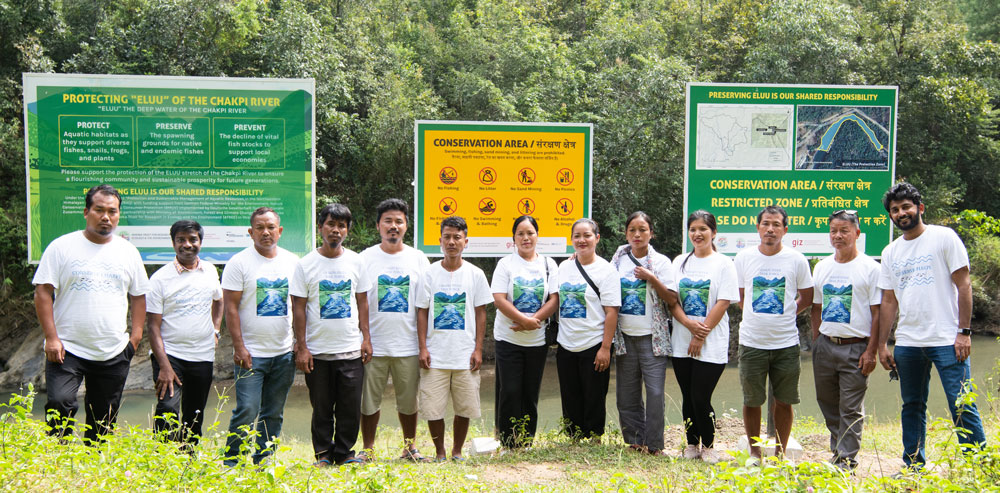 | | | | | | | | | |
| BACKGROUND The Chakpi River in Manipur, originating from the western slopes of Tengnoupal at about 1,755 m above mean sea level, is an important tributary of the Manipur River and drains a catchment of around 660 km² in Chandel district. The river supports numerous villages and sustains agriculture, fisheries and domestic water needs, forming a vital socio-ecological system for local communities.
Ecologically, the river lies within the Indo-Burma biodiversity region and supports diverse habitats, ranging from fast-flowing hill streams to slower-flowing lowland rivers. This habitat diversity sustains rich aquatic biodiversity, with nearly 90 recorded fish species, including species first described from the river, such as Psilorhynchus chakpiensis and Garra chakpiensis.
However, increasing anthropogenic pressures, including expanding settlements, pollution, overharvesting of aquatic resources and proposed hydropower projects, pose growing threats to the ecological integrity of the Chakpi River and the livelihoods that depend on it.
CHALLENGES - Limited ecological and socio-economic information on fish diversity, aquatic resources and community dependence in the Chakpi River Basin.
- Increasing pressure from expanding settlements, domestic waste disposal, agricultural runoff and overharvesting of fish and aquatic resources along the river.
- Potential ecological impacts from infrastructure developments, such as dams and hydropower projects, which are affecting the natural flow and biodiversity of the Chakpi River.
- Lack of long-term river monitoring systems and coordinated conservation efforts involving local communities and institutions.
OUTCOMES - Assessment of ecosystem services using ecological, social and economic methods.
- Stakeholder consultations to identify conservation priorities.
- Development of a long-term conservation and management action plan.
- Training communities in biodiversity and water quality monitoring.
- Establishment of a community-based river monitoring centre.
- Formation of a conservation group and alternative livelihoods for 100+ people.
- Declaration of a community conservation zone with restricted harvesting (banning of destructive fishing methods) and minimal human disturbance to support biodiversity recovery.
| | |
|
|
|
|---|
|
|
| | PROJECT
Restoring an urban lake: Design principles for a participatory socio-ecological restoration through a transdisciplinary approach, by ATREE Communication team | | |
| | | | | | | 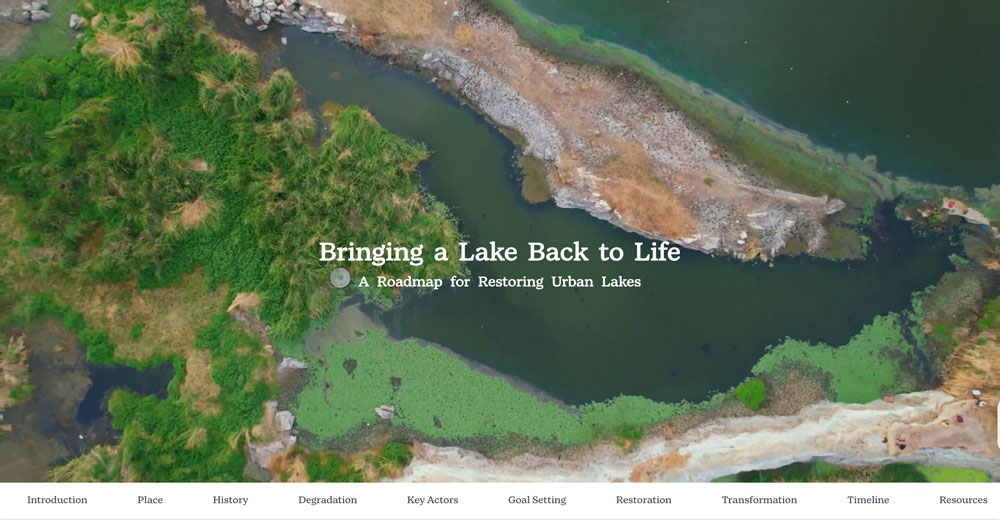 | | | | | | | | | |
| BACKGROUND Ecological restoration is increasingly recognised as a transdisciplinary endeavour that transcends conventional boundaries of science and practice. At ATREE, restoration projects are shaped by this understanding, in which “restoration” is not merely a technical exercise but a participatory process that integrates ecological sciences, cultural values, lived experiences and creative communication. Capturing this process and framing it as a blueprint for restoration became an essential step in communicating the approach ATREE upholds. CHALLENGES Urban lakes across India, including in Bangalore, are degrading at an alarming rate. Restoration has become a buzzword, with individuals and organisations stepping in to restore these lakes, each looking at the problem and its solution through their own lens. In such a scenario, it is important to put out a framework, a step-by-step guide for the socio-ecological restoration model that can be accessed by anyone who would like to take up urban lake restoration. The Communication team set out to make ATREE's transdisciplinary, community-led approach to restoration accessible through a story map.
OUTCOME The StoryMap (www.lakerestoration.atree.org) serves as a step-by-step restoration framework – a living blueprint – for researchers, practitioners or anyone who cares and is passionate about restoring their neighbourhood lake. Through textual and visual narratives, short documentaries, artwork and more, the StoryMap traces the lake’s revival journey. It offers an immersive experience, presenting the transdisciplinary efforts of team members from diverse disciplinary backgrounds and highlighting how place-based, participatory approaches can contribute to building more resilient and just socio-ecological systems. | | |
|
|
|
|---|
|
|
You could create a huge impact, we look forward to your contribution |
|
|---|
|
ATREE, Royal Enclave, Sriramapura, Jakkur Post, Bangalore 560 064
Phone: +91-80-23635555 | www.atree.org | info@atree.org |
|
|
|
|---|
|
|
|